The New Darling of Flooring Materials: An In-depth Look at Black HDF

In the ever-evolving world of interior design, flooring sets the foundation for a space’s entire aesthetic. Recently, a new trend has emerged from the shadows—quite literally. Black High-Density Fiberboard (HDF) flooring is rapidly gaining popularity among architects, designers, and homeowners. Moving beyond the traditional brown backing, this innovative material offers a unique combination of striking visuals and enhanced technical performance. But what exactly is it, and why is it becoming the new favorite in the industry?
What is Black HDF Flooring?
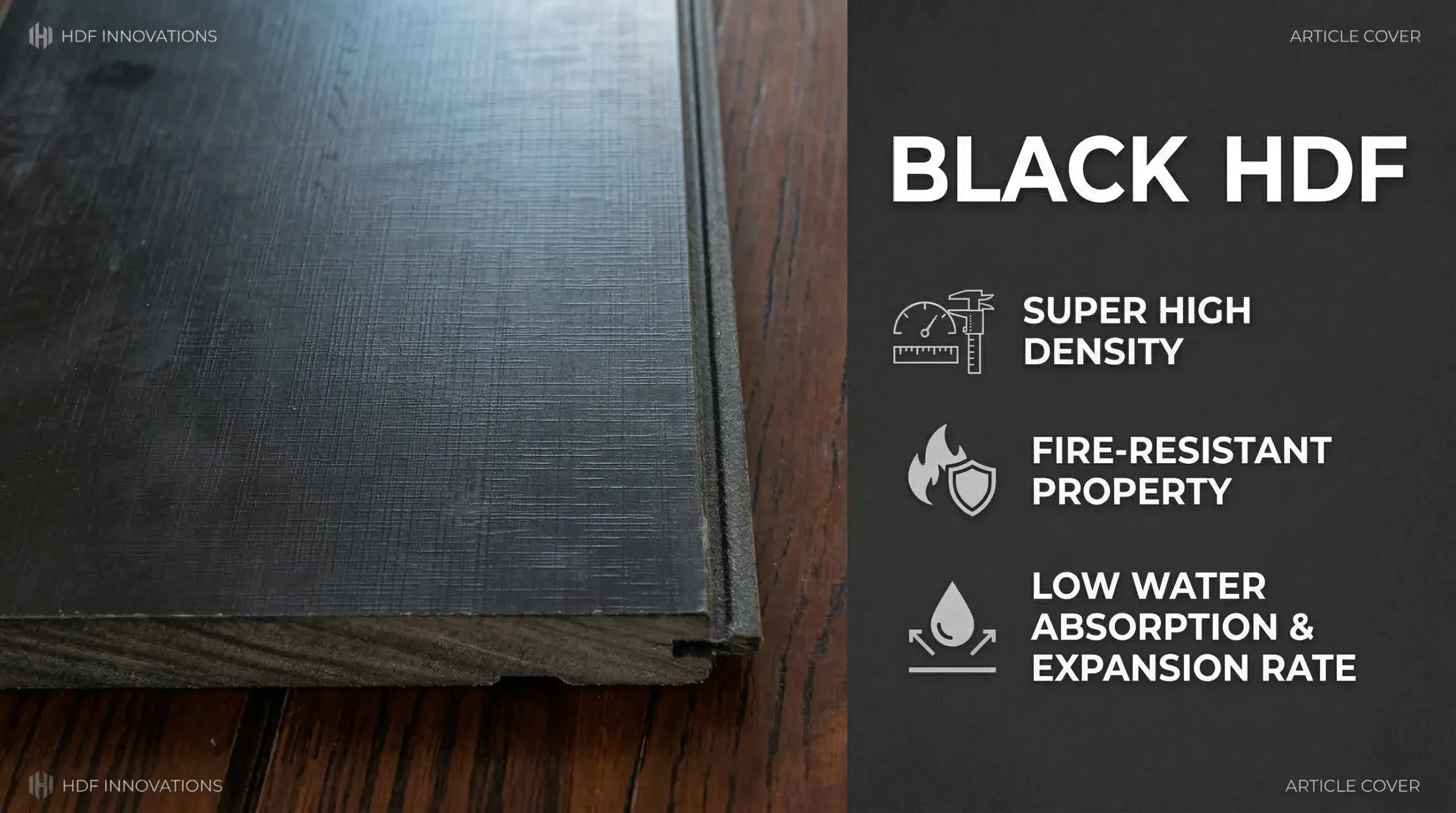
To understand the hype, it helps to look beneath the surface. Traditional laminate flooring typically features a brown or beige HDF core. Black HDF, however, is manufactured with a distinctive black core layer. This is achieved by adding color pigments or carbon compounds during the high-pressure pressing process .
This is not just a cosmetic change. The black core is often an indicator of a premium product line. While the color itself doesn’t directly affect performance, it is frequently associated with higher manufacturing standards, resulting in a denser and more stable board . This core is combined with a high-definition decor paper and a robust melamine wear layer on top, finished with a balancing layer underneath for stability .
Top Reasons to Choose Black HDF Flooring
Why are so many new projects opting for this darker alternative? The benefits go far beyond its good looks.
1. A Premium Visual Aesthetic
The most immediate advantage is visual. When planks feature beveled edges or V-grooves, the black core creates a striking, high-contrast definition. This “shadow effect” enhances the realism of the wood grain, making each plank stand out and giving the floor a high-end, luxurious feel that is difficult to achieve with standard light-colored cores .
2. Enhanced Structural Integrity
Black HDF cores are typically engineered to be denser than standard boards. While standard HDF usually starts around a density of 880 kg/m³, black variants can range from 880 to 920 kg/m³ or even higher . Some specialty boards, like CDF (Compact Density Fiberboard), can reach densities of 1100 kg/m³ . This density translates to superior impact resistance, better dimensional stability, and a solid feel underfoot, making it ideal for high-traffic areas .
3. Superior Water and Moisture Resistance
One of the most significant functional benefits is enhanced water resistance. The manufacturing process for black HDF often involves additional resins or hydrophobic treatments. Many products feature waxed or sealed edges to prevent water ingress. This allows them to achieve impressive water resistance ratings, with some premium options like EGGER’s Aqua+ core resisting moisture for up to 72 hours . This makes them suitable for areas where traditional laminate fears to tread, such as kitchens, dining rooms, and even laundry rooms .
4. Precision Engineering for Easy Installation
Black HDF is known for its precise cut and dimensional stability, which makes it perfectly suited for modern click-lock installation systems. The material holds tight tolerances, ensuring that planks lock together securely without gaps. This “floating floor” method is not only fast and DIY-friendly but also ensures a stable and durable result .
5. Commercial-Grade Durability
Because of its density, black HDF is frequently paired with high-wear surfaces. You can easily find options with abrasion classes AC4 or AC5. An AC4 rating is perfect for heavy residential use or light commercial settings, while AC5 handles heavy commercial traffic, making these floors incredibly resistant to scratches, stains, and impact .
Ideal Applications: Where to Use It
Thanks to its robust nature and stylish appearance, black HDF flooring is incredibly versatile.
- Modern Residences: Perfect for creating a dramatic statement in living rooms, open-plan areas, and bedrooms. It pairs exceptionally well with light-colored walls and minimalist decor.
- Kitchens & Dining Areas: With its enhanced waterproofing properties, it offers a stylish and worry-free alternative to tiles or wood in these spill-prone zones .
- Commercial Spaces: The durability (AC4/AC5) makes it suitable for boutiques, showrooms, offices, and hotels where foot traffic is high and aesthetics matter .
- Retail & Hospitality: It provides an upscale, durable finish that can withstand the demands of retail stores and restaurants while maintaining an easy-to-clean surface .
Buying and Installation Considerations
If you are considering black HDF for your next project, here are a few expert tips:
- Verify the Specs: Don’t assume all black cores are equal. Always check the technical data sheet. Look for the density (kg/m³), the abrasion class (AC rating) , and the specific water resistance rating (e.g., 24-hour, 72-hour) .
- Check for Certifications: Ensure the product meets safety standards. Look for CARB Phase 2 or ECE standards for low formaldehyde emissions, and CE marking for safety compliance in many regions .
- Installation is Key: Because these floors are dense, they can be slightly heavier to handle. Use a good quality underlayment designed for floating floors to help with sound reduction and moisture protection. Always remember to leave an expansion gap around the perimeter .
- Maintenance: Like all laminates, maintenance is easy. Use a damp mop with a pH-neutral cleaner. Avoid standing water and clean up spills immediately to protect the core long-term .
Conclusion
Black HDF flooring is more than just a fleeting trend; it is a logical evolution in flooring technology. It masterfully combines the bold, sophisticated aesthetic demanded by modern design with the structural integrity and moisture resistance required for contemporary living. By choosing a high-quality black HDF product, you are investing in a floor that is as durable and high-performing as it is visually stunning.