What Is Herringbone Laminate Flooring? Structure, Mainstream Products & Quality Guide

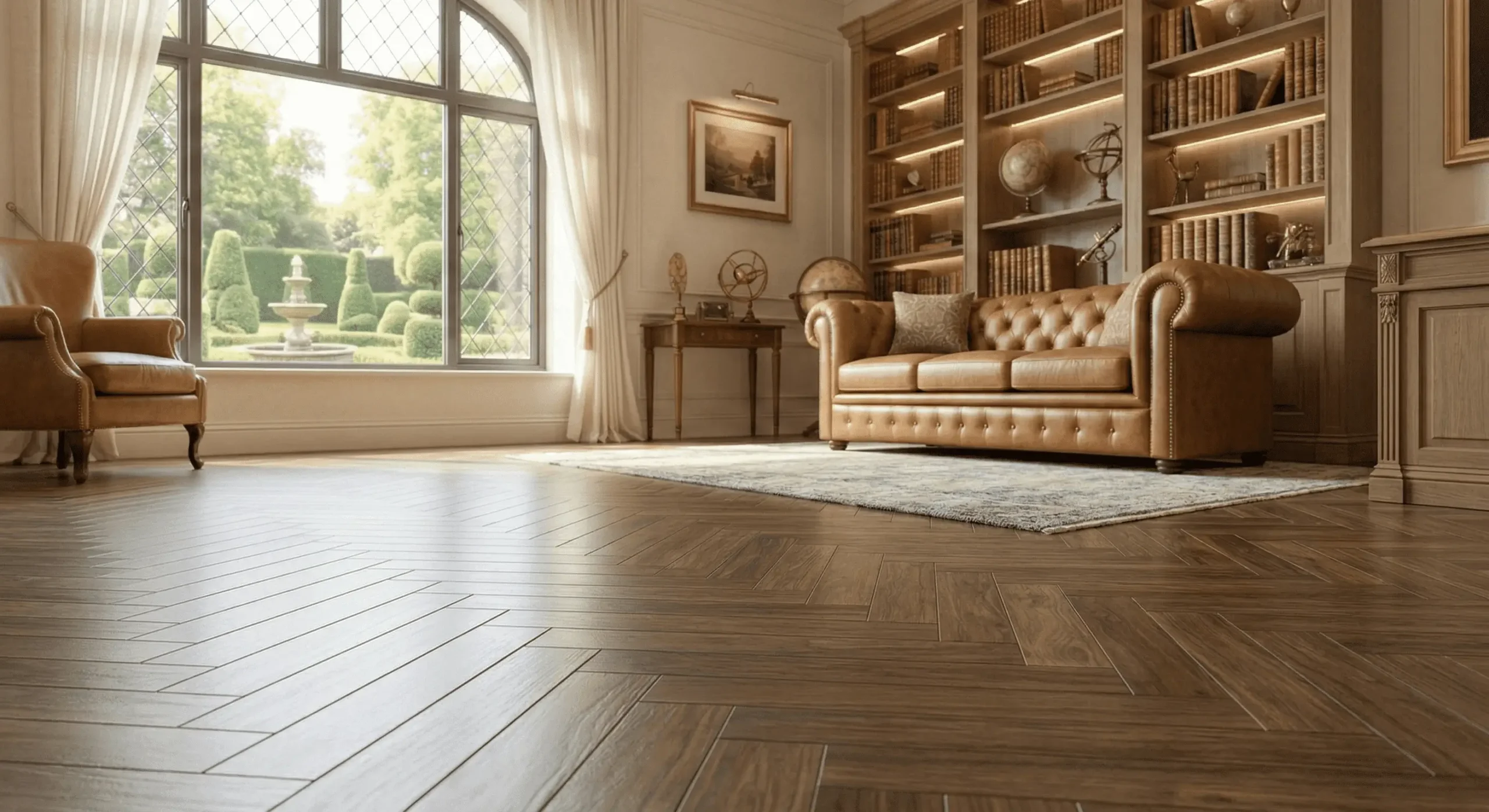
Herringbone laminate flooring, a popular choice for both residential and light commercial spaces, combines the classic aesthetic of herringbone pattern with the durability and cost-effectiveness of laminate flooring. As a core product in the flooring export market, it is favored by global buyers for its easy installation, low maintenance, and versatile design. To help you fully understand this product, we will detail its structure, composition, mainstream types, and key criteria for judging high-quality laminate flooring.
1. Structure and Composition of Laminate Flooring
Laminate flooring, including herringbone styles, is a multi-layer composite material pressed at high temperature and pressure, which is the key to its durability and stability. Its structure is usually composed of four layers, each with a specific function, working together to ensure the product’s performance and service life:
1.1 Wear Layer (Overlay Layer)
The topmost layer, also known as the overlay layer, is made of high-quality melamine resin mixed with corundum (Al₂O₃) particles. This layer is responsible for resisting daily wear, scratches, stains, and UV rays, effectively protecting the underlying decorative layer from fading or damage. The thickness and density of the wear layer directly determine the durability of the flooring, which is usually measured by the AC rating system (from AC1 to AC5) according to European Standard EN 13329
1.2 Decorative Layer
Beneath the wear layer is the decorative paper layer, which is printed with high-definition patterns using advanced rotary printing technology. It can perfectly replicate the texture of natural wood (such as oak, hickory, and acacia), stone, or other materials, giving the flooring a realistic and natural appearance. The quality of the decorative paper determines the clarity and color fastness of the pattern, with high-quality options maintaining their color even after long-term exposure to sunlight.
1.3 Core Layer (HDF Core)
The core layer is the backbone of laminate flooring, typically made of high-density fiberboard (HDF) rather than medium-density fiberboard (MDF) for better stability and strength. HDF is made from softwood fibers mixed with wax and resin binders, pressed at high temperature and pressure to form a dense panel. It provides the flooring with good dimensional stability, preventing warping, swelling, or deformation due to changes in temperature and humidity. Some high-quality products use HDF+ core boards with anti-expansion protection for enhanced moisture resistance.
1.4 Balance Layer (Backer Paper)
The bottom layer, also called the backer paper, is a waterproof and moisture-proof layer made of melamine-impregnated paper. Its main function is to balance the stress of the entire flooring, ensuring that the board remains flat and stable. It also prevents moisture from seeping into the core layer from the ground, further improving the product’s moisture resistance and service life.
2. Mainstream Laminate Flooring Products in the Market
With the continuous development of flooring technology, laminate flooring has formed a variety of mainstream products to meet different market demands. Herringbone laminate flooring, as a stylish variant, is often integrated with the following popular types:
2.1 AC-Rated Laminate Flooring
AC rating is the most common performance classification for laminate flooring, widely recognized in global markets. AC3-rated flooring is the most mainstream option for residential use, suitable for living rooms, bedrooms, and other areas with moderate foot traffic. AC4-rated flooring is suitable for light commercial spaces such as offices and retail stores, while AC5-rated flooring is designed for heavy commercial use with high foot traffic. Herringbone laminate flooring is usually available in AC3 and AC4 ratings to cover both residential and light commercial needs.
2.2 Waterproof Laminate Flooring
As an upgraded version of standard laminate flooring, waterproof laminate flooring is treated with special waterproof technology on the core layer and edge. It can resist moisture and water spills, making it suitable for areas with high humidity such as kitchens, bathrooms, and basements. High-quality waterproof herringbone laminate flooring can achieve 24-hour water resistance without swelling, combining style and practicality. This type is increasingly popular in markets with high humidity, such as Southeast Asia and Latin America.
2.3 High-Pressure Laminate (HPL) Flooring
HPL laminate flooring is manufactured through a high-pressure pressing process, with additional kraft papers added to the decorative layer to enhance durability. It has excellent scratch resistance, impact resistance, and wear resistance, making it ideal for high-traffic commercial spaces. Herringbone HPL flooring is favored by commercial buyers for its stylish appearance and long service life, widely used in hotels, restaurants, and shopping malls.
2.4 Designer Herringbone Laminate Flooring
This type focuses on aesthetic design, cooperating with professional designers to create unique patterns and colors. It can replicate rare wood textures or create personalized styles, meeting the needs of high-end residential and commercial spaces. Despite its high-end appearance, it remains affordable and easy to install, becoming a new trend in the export market. Popular designs include light wire-brushed oak, weathered wood, and exotic wood textures like acacia.
3. How to Judge a High-Quality Laminate Flooring
When selecting laminate flooring (especially herringbone styles) for export, quality is the key to winning market trust. Here are the core criteria to judge whether a laminate flooring is of high quality:
3.1 Core Layer Quality
High-quality laminate flooring must use high-density HDF (density ≥ 850 kg/m³) as the core layer. The HDF should be uniformly dense, without holes or loose fibers, ensuring good dimensional stability. Avoid products using MDF as the core layer, as MDF has poor moisture resistance and is prone to warping. Additionally, core layers with special anti-expansion formulas are more reliable for humid environments.
3.2 Wear Layer Performance
The wear layer should have a sufficient thickness (usually 0.3-0.7 mm) and high corundum content. For residential use, AC3 rating is the minimum requirement; for commercial use, AC4 or above is recommended. High-quality wear layers can resist scratches from pet claws, furniture, and daily foot traffic, and have good UV resistance to prevent fading. The NALFA macro scratch test is a reliable method to evaluate wear layer performance.
3.3 Environmental Protection Standards
Environmental protection is a crucial factor in the global flooring market. High-quality laminate flooring should meet strict formaldehyde emission standards, such as CARB Phase 2 and EPA TSCA Title VI in the United States, and E0/E1 standards in the European Union. Products with NALFA or EPLF certification are more trustworthy, as they have passed rigorous third-party testing for environmental protection and performance. Additionally, products using renewable raw materials (such as 80%+ renewable wood fibers) are more competitive in the green market.
3.4 Locking System
A high-quality locking system (such as CLIC it! lock) ensures easy and tight installation, without the need for glue. The lock should be firm and durable, able to withstand frequent stepping without loosening. For herringbone laminate flooring, a precise locking system is especially important to ensure the accuracy of the herringbone pattern and the flatness of the entire floor after installation. Micron-precise milling of the HDF core is essential for a reliable locking system.
3.5 Edge and Surface Treatment
The edges of high-quality laminate flooring should be smooth and flat, with no burrs or unevenness. The surface should be free of bubbles, scratches, or color differences. For waterproof products, the edge should be sealed with waterproof glue to prevent moisture penetration. Herringbone flooring should have precise cutting to ensure that the angle and length of each plank are consistent, creating a neat and beautiful herringbone pattern.
4. Conclusion
Herringbone laminate flooring is a perfect combination of aesthetics and practicality, with a multi-layer structure that ensures durability, stability, and easy maintenance. The current mainstream products, such as AC-rated, waterproof, HPL, and designer styles, can meet the diverse needs of global residential and commercial markets. When selecting high-quality laminate flooring, focusing on core layer quality, wear layer performance, environmental protection standards, locking system, and edge treatment is the key to gaining market competitiveness. As a cost-effective and stylish flooring option, herringbone laminate flooring will continue to occupy an important position in the global export market.