
What Is Laminate Flooring? Structure, Mainstream Products & Quality Guide

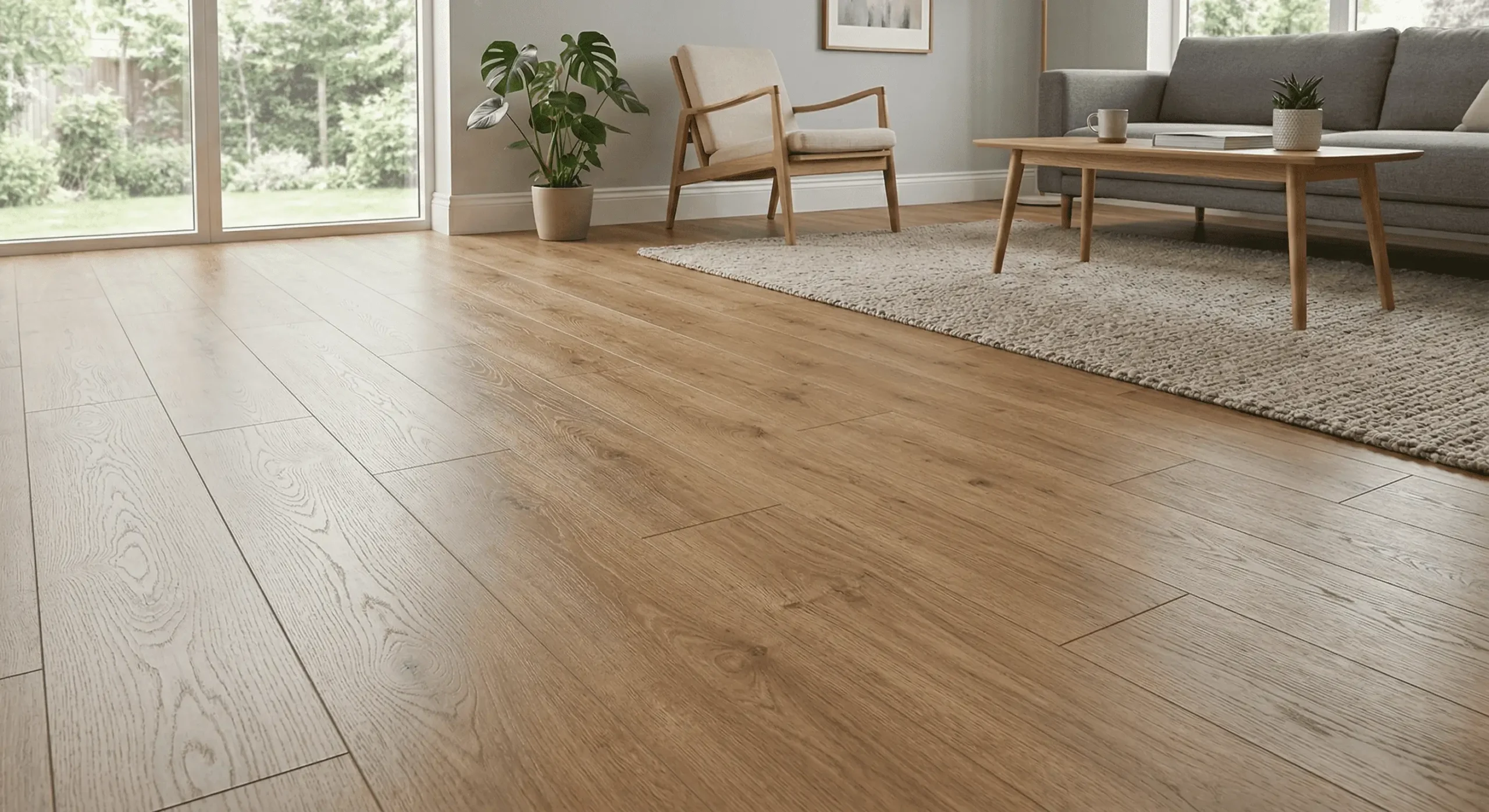
Laminate flooring is a popular engineered flooring option widely used in both residential and commercial spaces, favored for its durability, aesthetic versatility, and cost-effectiveness. As a key product in the global flooring trade, it mimics the appearance of natural materials like hardwood or stone while offering better resistance to wear, scratches, and moisture. This guide will break down its structure, core components, mainstream products in the current market, and key criteria to identify high-quality laminate flooring—essential knowledge for importers, distributors, and buyers in the international flooring industry.
1. The Structure and Components of Laminate Flooring
Laminate flooring is a multi-layered engineered product, with each layer designed to serve a specific function. Typically, it consists of 4 to 6 layers bonded together under high heat and pressure, ensuring stability and durability. Below is a detailed breakdown of each core layer, from top to bottom:
1.1 Wear Layer (Overlay)
The topmost layer is a transparent, protective overlay made of melamine resin-impregnated paper. It is the first line of defense against daily wear, scratches, stains, and UV rays, preventing the decorative layer from fading or being damaged. The thickness and quality of the wear layer directly determine the flooring’s durability, which is usually measured by the AC rating (Abrasion Criteria) from AC1 to AC5. Residential spaces typically use AC3 or AC4 rated wear layers, while commercial high-traffic areas require AC5 for long-term use.
1.2 Decorative Layer
Beneath the wear layer lies the decorative layer, a high-definition printed paper that replicates the texture and appearance of natural materials such as oak, maple, walnut, marble, or stone. Advanced printing technology ensures the pattern is realistic and consistent, allowing laminate flooring to match various interior design styles—from classic to modern. This layer is also impregnated with melamine resin to enhance its adhesion to the underlying core layer.
1.3 Core Layer (HDF Core Material)
The core layer is the backbone of laminate flooring, accounting for most of its thickness (usually 6mm to 12mm). It is made of High-Density Fiberboard (HDF), a wood-based panel composed of compressed wood fibers bonded with resin. HDF is chosen for its high density, excellent dimensional stability, and resistance to warping or swelling when exposed to slight moisture. Some high-end products may add an anti-static paper layer between the decorative layer and core layer to prevent static electricity accumulation, meeting international standards like DIN EN 1815.
1.4 Stabilizing (Backing) Layer
The bottom layer, also known as the stabilizing or backing layer, is made of resin-impregnated paper. Its primary function is to balance the tension between the top layers (wear and decorative layers) and the core, preventing the flooring from cupping, warping, or bending due to temperature or humidity changes. For some premium products, an additional footfall and impact sound insulation layer (e.g., 2.0mm thick PO foam) is added to reduce noise, making it suitable for spaces with underfloor heating.
2. Mainstream Laminate Flooring Products in the Global Market
With the development of flooring technology and changing market demands, several types of laminate flooring have become mainstream in international trade. These products are categorized based on thickness, functionality, surface texture, and application scenarios, catering to diverse needs from residential to commercial use:
2.1 Standard Thickness Laminate Flooring (8mm & 12mm)
8mm and 12mm are the most common thicknesses in the global market. The 8mm option is lightweight, cost-effective, and suitable for residential spaces like bedrooms, living rooms, and hallways. It is easy to install and ideal for projects with budget constraints. The 12mm version is thicker, offering better sound insulation and foot comfort, making it popular for larger residential spaces, offices, and light commercial areas (e.g., retail stores). Both thicknesses typically use click-lock installation systems, which are convenient and require no adhesives, reducing installation time and labor costs.
2.2 Waterproof Laminate Flooring
Waterproof laminate flooring is a fast-growing mainstream product, especially in regions with high humidity or areas prone to moisture (e.g., bathrooms, kitchens, basements). It features a water-resistant HDF core and enhanced edge sealing technology, preventing water from seeping into the core and causing swelling. Some products use wax-sealed joints or waterproof resin coatings to further improve moisture resistance, meeting the needs of both residential and commercial wet areas. This type of flooring is certified to withstand prolonged water exposure, making it a popular choice for export to tropical or coastal regions.
2.3 High-Pressure Laminate (HPL) & Direct-Pressure Laminate (DPL)
High-Pressure Laminate (HPL) is manufactured by pressing multiple layers under high pressure (1000-1500 psi) and high temperature, resulting in superior durability and resistance to scratches, stains, and impact. It is ideal for high-traffic commercial spaces such as hotels, hospitals, and shopping malls, with AC5 wear rating. Direct-Pressure Laminate (DPL) is produced under lower pressure, making it more cost-effective and suitable for residential use. It balances performance and affordability, becoming a mainstream choice for budget-conscious buyers in the export market.
2.4 Texture & Finish-Specific Laminate Flooring
To meet diverse aesthetic demands, mainstream laminate flooring also includes products with different surface textures and finishes. Embossed-in-Register (EIR) laminate mimics the natural grain of wood, with texture that aligns with the printed pattern, enhancing realism. High-gloss laminate features a shiny finish, suitable for modern interiors, while matte finish laminate offers a subtle, elegant look and hides scratches more effectively. Additionally, tile-look laminate flooring, which replicates the appearance of ceramic or stone tiles, is gaining popularity in commercial and residential spaces alike.
3. How to Identify High-Quality Laminate Flooring
When selecting laminate flooring for import or distribution, it is crucial to distinguish between high-quality and low-quality products. The following criteria are widely recognized in the international market, helping buyers make informed decisions:
3.1 Check the AC Wear Rating
The AC rating is a key indicator of durability. As per international standards (ISO 4586-5:2018 and EN 13329), AC1 is suitable for low-traffic residential areas (e.g., bedrooms), AC2 for moderate residential traffic, AC3 for general residential and light commercial use, AC4 for heavy residential and commercial traffic, and AC5 for high-traffic commercial spaces. High-quality laminate flooring for export should have a clear AC rating certificate from a recognized third party (e.g., NALFA, ISO).
3.2 Evaluate the Core Layer Quality
The core layer’s density and material directly affect the flooring’s stability. High-quality laminate uses HDF with a density of 800-900 kg/m³, which is dense, strong, and resistant to warping. Low-quality products may use low-density fiberboard (LDF), which is prone to swelling and damage when exposed to moisture. Additionally, check for formaldehyde emission levels—high-quality laminate should meet international standards such as CARB Phase 2, EPA TSCA Title VI, or E0/E1, ensuring it is safe for indoor use.
3.3 Inspect the Locking System
A high-quality locking system (e.g., click-lock) ensures easy installation and a tight fit between planks, preventing gaps that can trap dirt or moisture. The lock should be sturdy, easy to engage, and able to withstand frequent foot traffic without loosening. Test the locking mechanism by joining two planks—they should fit seamlessly and not separate when pulled gently. Premium products often use reinforced locking systems for long-term stability.
3.4 Verify Surface and Edge Quality
The wear layer should be thick and transparent, with no bubbles, scratches, or unevenness. The decorative layer should have a clear, realistic pattern with no color fading or blurring. The edges of the planks should be smooth, straight, and free of chipping, ensuring a tight fit during installation. High-quality laminate also has consistent thickness across all planks, avoiding uneven surfaces after installation
3.5 Check Certification and Testing Reports
Reliable laminate flooring should have certification from international authorities, such as ISO 4586-5:2018 (for flooring grade laminates), NALFA LF-01 (for performance), and environmental certifications (CARB, EPA). Additionally, ask for testing reports on wear resistance, moisture resistance, dimensional stability, and formaldehyde emissions. These documents confirm the product’s quality and compliance with international standards, which is essential for export to global markets.
4. Conclusion
Laminate flooring is a versatile, durable, and cost-effective flooring solution that has gained widespread popularity in the global export market. Its multi-layered structure ensures stability and performance, while its diverse mainstream products cater to various application scenarios—from residential to commercial, from dry to wet areas. By understanding its structure, recognizing mainstream product types, and using the key criteria to identify high-quality products, importers, distributors, and buyers can make informed decisions, ensuring they select products that meet market demands and international standards.